Tesla Model 3 vs. Kia EV6.The honest answer after owning both.
We still like our EV6. It is quick, useful and well built. But after the Model 3 became our daily default, returning to the Kia made one thing obvious: the Tesla feels less like a collection of features and more like one complete idea.
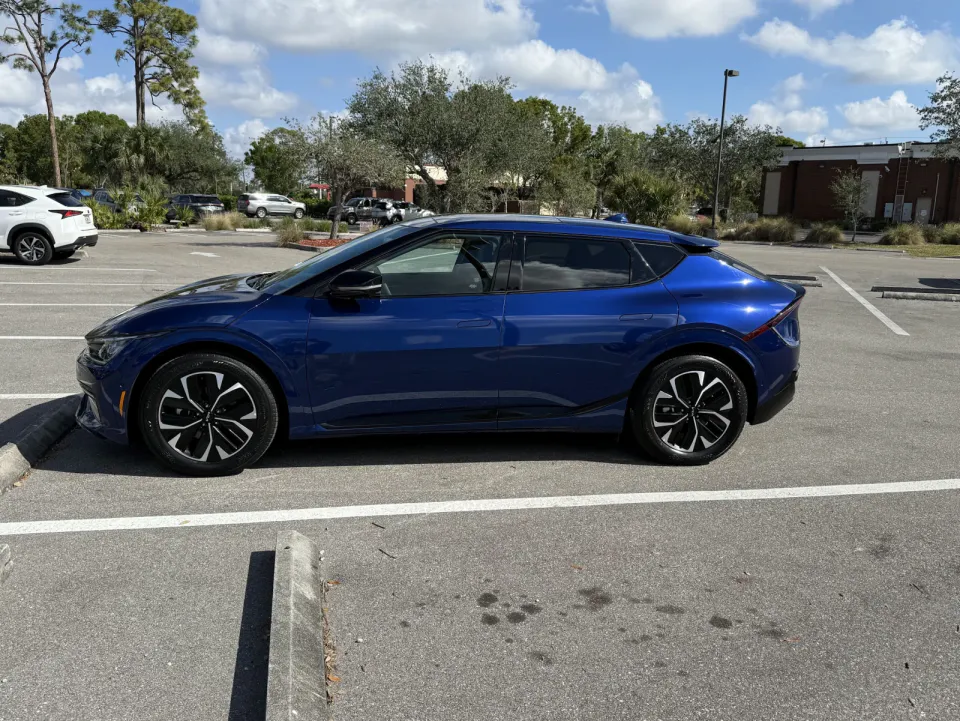
The EV6 wins some practical battles. The Model 3 wins our daily routine.
If both cars disappeared tomorrow, we would replace the Tesla first. Its app, effortless phone-key experience, visibility, one-pedal driving, efficiency, charging ecosystem and FSD Supervised all work together in a way that has changed how often—and how far—we are willing to drive.
The EV6 is not the loser. Its hatchback is easier to load, its seating position is higher, highway isolation may be slightly better, and we still appreciate its physical shifter and conventional driver-assistance controls. These are two excellent EVs with different strengths.
“The EV6 is a good car. The Tesla feels like magic. Everything makes sense together.”
You value the whole experience
Software, app, FSD Supervised, road-trip confidence, visibility and effortless daily use matter more than a hatchback body.
You value utility and familiarity
You want easier loading, a taller seating position, more traditional controls and an excellent EV that does not ask you to buy into Tesla.
The exact cars behind this comparison.
This is not a controlled instrument test, and the unequal mileage matters. It is a report on how both cars behave in the same household, with the same owners and the same priorities.
Exterior dimensionsTesla Model 3 vs. Kia EV6 dimensions: nearly the same length, very different shapes.
The Model 3 is only about an inch longer, but the EV6 is wider, more than four inches taller and rides higher. Those differences help explain why the Kia feels roomier and easier to load while the Tesla feels lower, clearer and easier for us to place on the road.
| Measurement | 2026 Model 3 RWD | 2024 EV6 GT-Line RWD | Difference |
|---|---|---|---|
| Length | 185.8 in. | 184.8 in. | Model 3 is 1.0 in. longer |
| Width, mirrors excluded | 72.8 in. | 74.0 in. | EV6 is 1.2 in. wider |
| Height | 56.7 in. | 60.8 in. | EV6 is 4.1 in. taller |
| Wheelbase | 113.2 in. | 114.2 in. | EV6 is 1.0 in. longer |
| Ground clearance | 5.4 in. | 6.1 in. | EV6 has 0.7 in. more |
Dimensions are manufacturer figures and can vary by configuration. Sources: Tesla Model 3 Owner's Manual and Kia's 2024 EV6 specifications.
The EV6 did not become worse. Our frame of reference changed.
When we first brought home the EV6, it blew away the gas cars and hybrids we had tested. It was fast, substantial and fun. It still gets up and goes.
Then we spent more than a month reaching for the Model 3. When we finally took the EV6 back onto the highway, the Kia felt almost like a tank: still quick, but heavier and less eager. The contrast was not just acceleration. The Tesla’s controls, app, visibility and driving behavior had quietly reset what felt normal.
The Model 3 now gets chosen for almost every trip more than five miles from home, whenever traffic is likely, or whenever we simply do not want driving itself to feel like work.
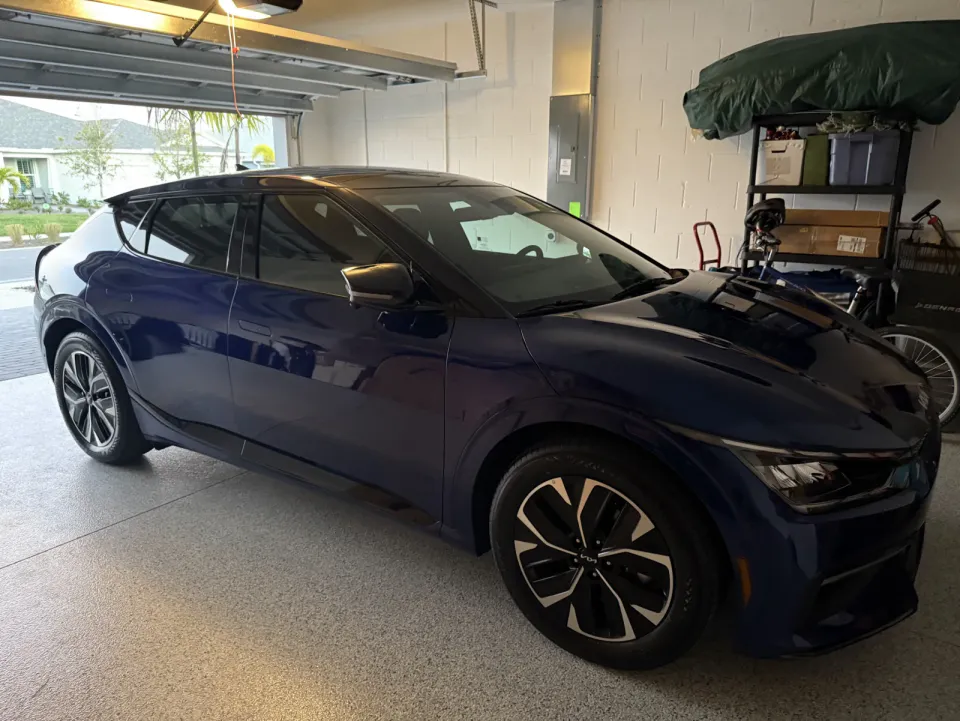
The Tesla feels lighter, clearer and easier to place.
For us, the Model 3 is more comfortable on rough roads, has the better seats and feels more responsive in ordinary driving. It is also easier to park and see out of. That last point became surprisingly hard to ignore: after living with the Tesla’s visibility, the EV6 suddenly felt much more closed in.
The Model 3’s one-pedal calibration also feels more natural. The EV6 can deliver a similar experience, but it sometimes feels hesitant to pick up and its extra sense of weight works against the immediacy we enjoy in the Tesla.
The Kia gets two meaningful wins. At highway speed, both are close, but the EV6 can feel a little more insulated. Its taller seating position is useful enough that we have wondered whether a Model Y should eventually join our purchased Model 3 when the EV6 lease ends.
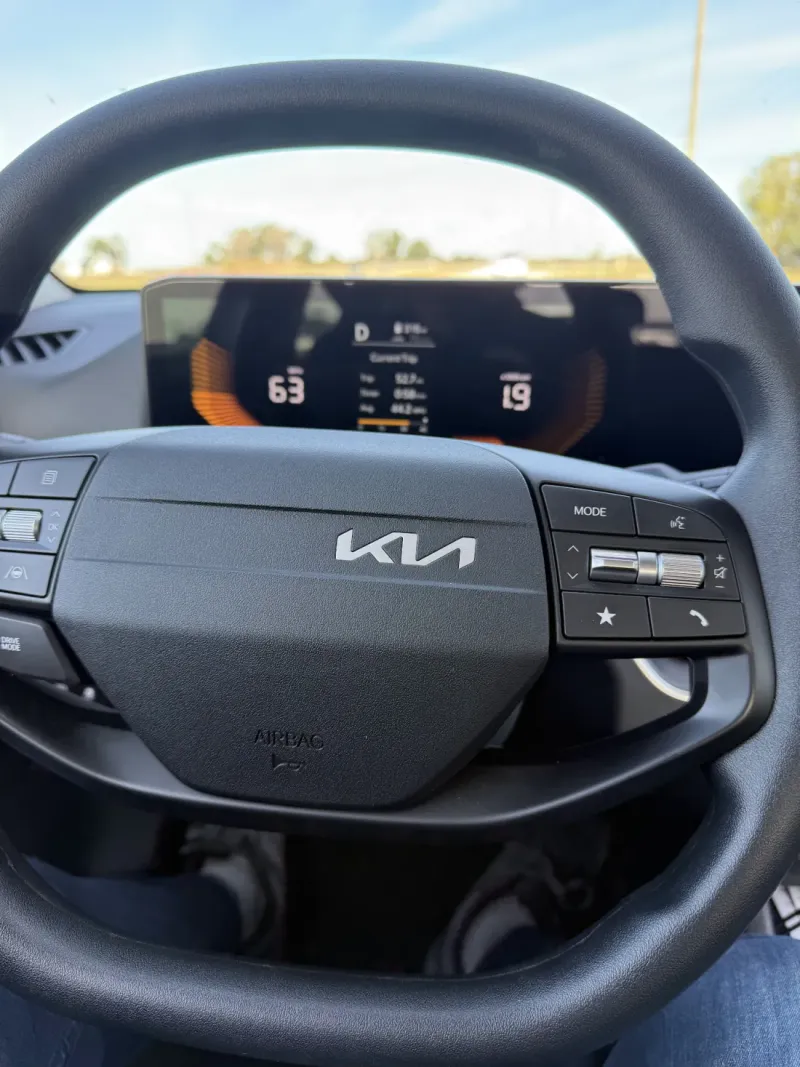
The Tesla app is not a small advantage. It changes the relationship with the car.
Everything is easier in the Tesla app. For our 2024 EV6, we still carry a key. The Model 3 lets us approach, get in and drive so naturally that we have climbed into the Kia more than once and tried to select a gear before remembering to press its start button.
The EV6 does have our favorite physical gear selector. Tesla’s on-screen shifting can occasionally feel finicky—possibly made worse by our screen protector. The Kia also gives us Apple CarPlay and Google Maps. Tesla navigation works, but we do not always like its chosen route.
Grok currently adds some usefulness and plenty of personality. We have used it for conversations and jokes on the road. It is not why we would buy the car, but it contributes to the feeling that the vehicle can keep becoming more capable after delivery.
FSD Supervised is the biggest difference—and the feature that requires the most honesty.
FSD Supervised is far beyond what we use in the EV6 in terms of how much of a trip it can handle. Its greatest benefit is not novelty; it is the reduction in mental workload. Traffic no longer leaves us as depleted, and we are planning a road trip we probably would have flown instead because the drive feels more manageable.
It is not autonomous, and it does not eliminate stress. Four-way stops remain the most uncomfortable example for us. Other drivers creep or ignore the expected order, FSD may hesitate, horns start, and we intervene. We also take over for potholes and closely monitor speed. On our current software, Standard mode can creep 10 to 12 mph over our intended speed, and our car can still enter our 25 mph community at 55 mph when there is no immediate sign to correct its map context.
Kia’s HDA II has a smaller job, but it performs that job well. We particularly appreciate having conventional lane-centering assistance available when we are driving manually. With the Tesla, FSD is the transformative feature; without it engaged, we miss that simple Kia-style lane-centering layer.
At home, both are easy. Away from home, Tesla asks less of us.
Both cars normally charge at home, where neither creates friction. On the road, the Tesla experience is simpler for us: more familiar charging coverage, easy connection and fewer moments spent juggling third-party apps. Combined with FSD Supervised, that makes the Model 3 our clear road-trip choice.
We have found the Tesla’s real-world range more predictable. The EV6 estimate moves around more and, in our use, tends to land slightly below what we expected. We have not performed controlled, back-to-back fast-charging tests, so we are not turning our experience into a claim about laboratory charging curves. The EV6 charges perfectly well; the Tesla simply makes the entire trip easier to plan and execute.
The EV6 still earns its place in our driveway.
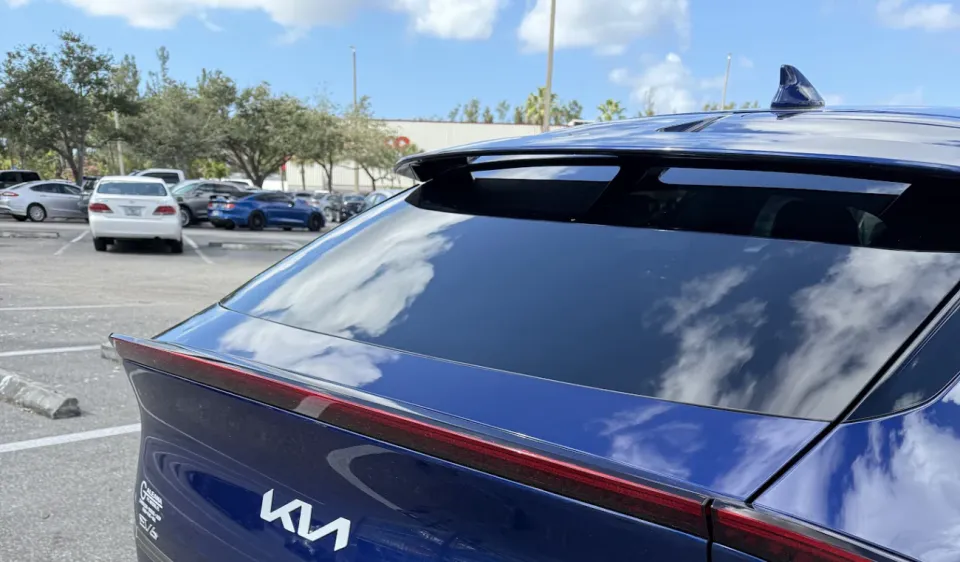
These are our actual car and controls—not manufacturer photography. The rear image is intentionally cropped so the license plate is not published.
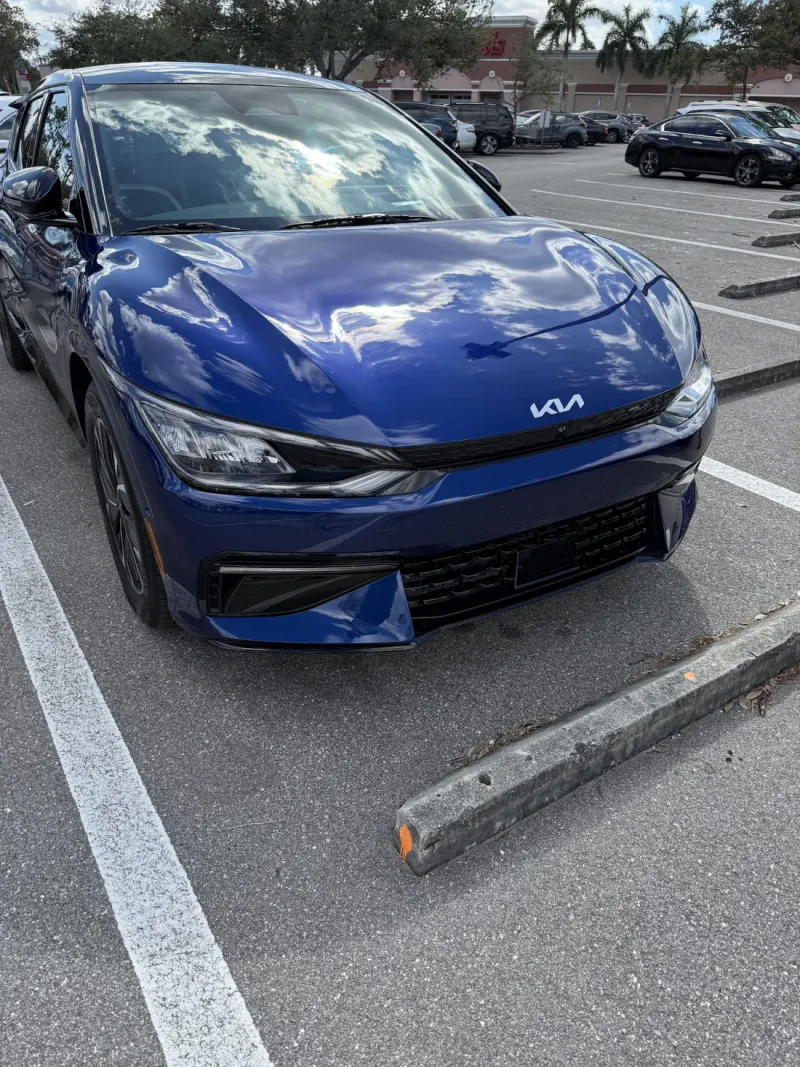
The hatchback is the EV6’s clearest, least-debatable advantage.
The EV6 is easier to load and better shaped for bulky items. When we are picking up something large, it gets the assignment. Its extra height also makes it feel more naturally suited to that role.
The Model 3 is more useful than its sedan shape suggests. It comfortably handles our normal life with two to four people, and the cargo space can swallow a surprising Costco run. But if the same awkward box has to go into both cars, the EV6’s hatch wins.
Both service experiences have been good—just completely different.
Our preferred Kia dealer in Fort Myers has been excellent: friendly, communicative and reassuringly human. The EV6 has had a persistent noise the dealer considers normal, though we remain unconvinced, and it once needed a charging-system component replaced. Otherwise, it has been a solid car.
Tesla service is a technology-first experience. We had a rattle inspected, and our first larger appointment involved a passenger-side mirror that was overextending. The app tracked the conversation and repair clearly, the necessary parts were replaced, and the car was ready the same day. We did not need a loaner, though one would have been available.
Tesla communicates better for the way we like to work: self-service, visible progress and fewer phone calls. Still, a quick human hello at drop-off would improve the experience. Kia wins on warmth; Tesla wins on the information flow.
Insurance on the Tesla was higher than we expected—even after knowing it would be higher. Routine maintenance on both has been refreshingly light: tire rotations and cabin filters cover much of the normal list, and the filter changes are easy enough to handle yourself.
Drive both. Then choose the one that makes you want to go somewhere.
Tesla fans sometimes underestimate how far Kia and Hyundai have come. The EV6 is quick, well equipped, well made and genuinely desirable. Its technology is good, its hatch is useful and its more traditional interface will be a feature—not a compromise—for many people.
Traditional-car shoppers often underestimate the Model 3 in the opposite direction. It is agile, comfortable and remarkably easy to live with. The app, charging ecosystem and connected controls reduce range anxiety instead of merely promising that you should not feel it. FSD Supervised, used with constant attention, takes enough stress out of driving that it changes the trips we are willing to take.
We kept the EV6 partly because time remains on its lease, but it still serves us well. If cargo access and seating height lead your list, it deserves serious consideration. If you want the most cohesive technology experience—and especially if FSD Supervised matters—the Model 3 is our recommendation.
Both are excellent EVs. The Model 3 is the one we reach for first.
Check the referral before you place the order.
My guide explains when to use the link, how to verify what Tesla is showing and why the order flow—not a coupon site—is the source of truth.
If you use my link for an eligible order, Tesla may reward me too. Benefits, terms and eligibility can change; verify everything in Tesla’s order flow before submitting.