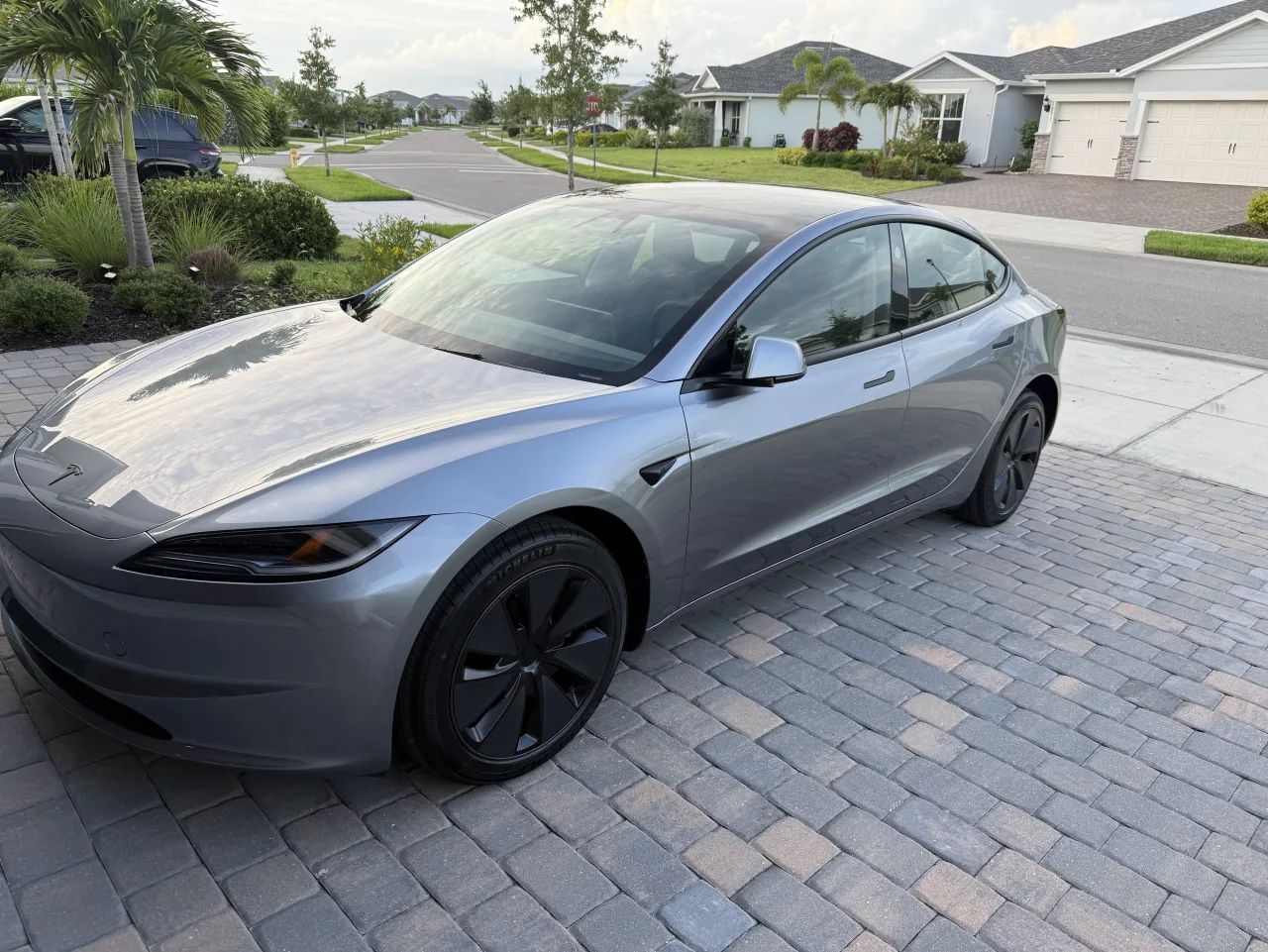
We picked up our Quicksilver Tesla Model 3 on May 31, 2026. A hundred days later, the biggest surprise isn’t a software feature or a performance number.
I still smile when I get behind the wheel.
With most cars, the excitement settles into familiarity after a couple of weeks. You appreciate the car, but eventually it becomes the thing you drive to get somewhere. This one still feels different.
Our first 100 days, at a glance
The drive after vacation said everything
We had been away on vacation for a couple of weeks. After coming home, I took the Tesla out again and felt genuinely happy to be driving it.
Not because we had just collected it. Not because I was trying a new feature. I was simply back in our car, enjoying it.
That feeling is the part of ownership I didn’t know how to evaluate before buying. A test drive can tell you plenty. It cannot tell you whether you will still look forward to getting behind the wheel a hundred days later. For us, the answer is yes.
Quicksilver still makes us happy
We love the color. We don’t see many Quicksilver Teslas around us, which helps ours feel a little distinctive. That isn’t a claim about how rare the color is nationwide—just what we notice in our own travels.
A hundred days in, it remains one of the choices we’re happiest with.
FSD is part of the appeal—not the entire story
We’ve driven just over 3,000 miles, with approximately 56% of our driving using Full Self-Driving (Supervised). One of the clearest reminders of its value came when I deliberately drove without it. I realized how accustomed I had become to the assistance.
At the 100-day mark we were still frustrated by lane choices and hesitation at four-way stops. Our FSD version journal, now through 14.3.13 follows the improvements after this story was published, alongside the issues that still require supervision.
What I wish felt better when I’m driving manually
My biggest frustration outside FSD is that the lane-support experience hasn’t felt as reassuring or apparent as I expected.
Tesla does document lane-departure warning and assistance features, with operating limits. That is different from continuous lane-centering assistance, and I don’t want to confuse the two. We have not verified the settings on our own car for this article, so this is not a diagnosis of why a particular warning or intervention did not occur.
My point is about the experience: when I choose to drive manually, I would like the available assistance and its limitations to feel clearer. I remain responsible for steering, watching the road, and keeping control either way.
We love the Model 3. The Model Y may fit our next chapter better.
October 24, 2026 update: The thoughts below reflect what we were considering at the 100-day mark. Our new Model 3 versus Model Y owner story explains why we chose the Model 3: there are two of us, our dogs fit comfortably in the back seat, we prefer its look, and we still have the Kia EV6 when we need extra space.
If we were choosing our next Tesla today, we would probably lean toward the Model Y—not because we regret buying the Model 3, but because owning it has changed what we want to do next.
The taller vehicle appeals to us for easier entry and exit. We’ve also seen how other owners use their Model Ys for road trips with dogs, and that has us thinking about what would work for our own travels.
Over these first hundred days, we’ve grown more confident in our range and less anxious about charging. We’re increasingly interested in taking an EV on longer trips, rather than worrying about whether we should.
The Model 3 is amazing. The Model Y simply looks like it could be a better fit for that next adventure. This is what appeals to us, not a claim based on our own Model Y road-trip test.
We still like our Kia EV6. When its lease ends, we’ll see what Tesla, Kia, and Hyundai have to offer. Right now, though, the Model Y is the one we’re thinking about. Our Model 3 versus Kia EV6 comparison explains what living with both cars has taught us.
A hundred days in, we have criticisms, questions, and things we’d like improved. We also have a car that still makes us smile.
Experience and sources
Ownership observations and figures: Cameron DeJong, September 8, 2026. Vehicle delivered May 31. Original owner photographs. Safety-feature reference: Tesla Model 3 Lane Assist documentation. Offers and eligibility: Tesla Refer and Earn terms. A documented feature is not a guarantee of intervention in every situation.